

Return of the king: what can the movies teach us
about the coronation?
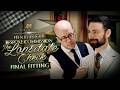
Icy rejection in Welles’s Chimes at Midnight, Chalamet
stripped to the waist, a swaggering Chris Hemsworth – which will Charles
channel on Saturday?
Peter
Bradshaw
@PeterBradshaw1
Thu 4 May
2023 08.00 BST
On the
morning of Saturday 6 May, King Charles III will waken to the realisation that
this is the day which he has anticipated, or perhaps dreaded, all his life. Yet
there is no reason to suppose he will be nervous. He is a veteran of royal
occasions by the thousand and, specifically, his own two weddings which he
experienced at the ages of 32 and then 56; perhaps he once imagined his
coronation would happen sometime between these two. Now he is 74 and, if
anything will cloud the experience for him, it might be the memories of his
parents’ recent (and comparably momentous) funerals.
But how do
we imagine he will feel about his role in this sumptuous ritual which is in its
way a survival from Britain’s pre-Reformation Catholic past? And is there
anything in the movies to help us? The most famous coronation scene in cinema
comes to us via Shakespeare, in the form of Henry’s icy rejection of Falstaff
on his coronation day in Orson Welles’s Chimes at Midnight, his concatenated
mashup of Richard II, both parts of Henry IV and Henry V. Keith Baxter’s Hal –
his face nightmarishly shot from below, from Falstaff’s supplicant position, in
fact – humiliates Welles’s desperately cringing rascal, when this scapegrace
former pal presumes to approach him on the day itself, sensationally disrupting
the ceremony: “I know thee not old man.”
For Hal,
this moment is the coronation, the moment of assuming adult responsibilities
and ruthlessly discarding the past. (Kenneth Branagh’s Henry V contrived a
flashback to the same traumatic moment.) David Michôd’s The King (2019) was
another Henriad, this time with Timothée Chalamet as Henry, but his coronation
was a more religiose/pagan affair, with the young Henry stripped to the waist,
and no intrusions from Falstaff. But for Charles, all this has a tenuous
relevance: he might find more kinship with King Lear and his difficult
children.
In fact,
Charles has had a minor role in a coronation movie – as a little boy waving
from the Buckingham Palace balcony – in the stately but brash Rank documentary
A Queen Is Crowned from 1953; it was produced by British film-maker Castleton
Knight, written by Christopher Fry and narrated with outrageous hamminess by
Laurence Olivier, channelling his wartime Henry V. The BBC’s TV coverage, which
inspired a whole generation to buy televisions, was long, lugubrious and in
black-and-white. This movie, which was nominated for an Oscar and actually won
a Golden Globe, was intended as a permanent record, shot in almost surreally
rich Technicolor, and cut to 80 minutes. Its dreamy and solemn shots of this
sceptr’d isle that preceded the ceremony were a kind of cinematic-poetic
version of a BBC outside broadcast. For these, and for the processions down the
Mall (with some horses and carriages famously provided by movie producer
Alexander Korda) Olivier did his ecstatic and strangulated “outside voice”
shouting: for the interior of the Abbey, he dropped to a whispery murmur.
Richard Dimbleby’s TV narration was quite a calm conversational voice: but it
was Olivier who influenced the subsequent royal commentators to go into that
solemn whisper.
The
on-screen imagery and grammar of British coronation ceremony could be said to
have been invented at the dawn of cinema. French silent movie director Georges
Méliès was commissioned by American producer George Urban to film the
coronation of Edward VII and Queen Alexandra in 1902 – but having been refused
permission to film the real thing, Méliès simply reconstructed (or faked) it on
an outdoor painted set in France. His film has amazing audacity and elan in
staging a brisk four-minute version, shot from a single camera position to the
thrones’ left: a bold and dramatic event, and a great commercial success. (At
60, Edward was a mere boy on his coronation day compared with Charles.)
As for
other coronation scenes, there is the coronation of Charles’s French namesake,
Charles VII in Jacques Rivette’s Joan the Maid in 1994, which has a startling
tracking shot of notables jostling for a view of the moment itself. Or there is
the coronation of Cate Blanchett’s queen in Elizabeth, which imagines another
stately, sacrificial, faintly sinister ceremony; perhaps Charles will imitate
Blanchett’s nervous fingering of the crown. For laughs, there is the coronation
of Chris Hemsworth’s Thor, the Scandi deity swaggering into the event as if he
is accepting the Rugby World Cup. But for sheer impossible majesty, little
surpasses Ian McKellen’s Gandalf placing the crown on Viggo Mortensen’s Aragorn
in The Lord of the Rings. If Charles aspires to an Aragorn moment, no one could
blame him.


.jpeg)


.jpeg)
.jpeg)
.jpeg)


.jpeg)




Sem comentários:
Enviar um comentário