terça-feira, 29 de novembro de 2016

Italy’s €360 billion referendum


Italy’s €360 billion referendum
A major political shock is sure destabilize the banking system — and there seems to be one coming right around this weekend.

By SILVIA SCIORILLI BORRELLI 11/29/16, 5:37 AM CET Updated 11/29/16, 7:41 AM CET

Sunday’s referendum in Italy could derail Prime Minister Matteo Renzi’s political career. But what really worries the rest of Europe is the fate of the country’s banks.

Italy’s banking system is staggering under €360 billion in bad loans. Almost any outcome that destabilizes Italian politics would send tremors through the country’s rickety financial system. While the long-term consequences could be dramatic — in a worse case scenario perhaps leading to the collapse of the eurozone — the first victims could be efforts to rescue two of Italy’s largest lenders.

Renzi has pledged to step down if he loses the referendum — as polls indicate he is likely to do. A change in government will unnerve investors and jeopardize a plan to use private money to revitalize Monte dei Paschi di Siena (MPS) and UniCredit — the country’s third-largest and largest bank, respectively.

MPS, in particular, would face a rocky future. The Tuscan-based bank was spared a government bailout over the summer when Renzi drew up a last-minute €5 billion recapitalization plan with JPMorgan and Mediobanca, an Italian investment bank. The success of the operation is now contingent on the outcome of Renzi’s referendum.

In a document presented to the bank’s shareholders at their last meeting in Siena on November 24 and seen by POLITICO, the Tuscan lender said: “The feedback given by the banks overseeing the recapitalization operation highlight the substantial unavailability of institutional investors to take important decisions relating to investments in Italian companies before knowing the outcome of the constitutional referendum.”

Headquarters of the Monte dei Paschi di Siena bank | Giuseppe Cacace/AFP via Getty Images
According to sources, JPMorgan and Mediobanca have retained the right to withdraw from the operation in case of any political or financial event that would prejudice the success of the recapitalization effort. Meanwhile, the nearly bankrupt Italian lender has struggled to attract other investors.

Sources say the Qatar Investment Authority, a government fund, could be willing to contribute €1 billion to the recapitalization, but won’t commit until the outcome of the referendum is known.

If private investors walk away, MPS will likely face a harsher “resolution” process based on EU rules, which will force shareholders and bondholders, including many mom-and-pop investors, to swallow big losses. Such an approach would be politically toxic in Italy and give wings to the anti-establishment 5Star movement, fueling Euroskepticism at a time when Brussels is struggling to hold back the tide of populism across the Continent.

The 5Star movement’s founder, comedian Beppe Grillo, has called for a referendum on staying in the single currency. The Italian system doesn’t allow voters to have their say on international accords, but polls indicate at least 30 percent of Italians favor a return to the lira.

The failure to bring MPS back to health could also cast doubt on UniCredit’s ability to attract investors for its own €10-€13 billion recapitalization plan, its fourth in five years. While few investors believe Italy’s only systemically important bank will end up short of cash, the operation would undoubtedly become more difficult and expensive.

“Renzi was the first person who failed to understand the risks he exposed the country to by linking the referendum to his government’s fate,” one person familiar with the bank’s plans said.

The outlook for market solutions to the problems of six other smaller banks would look similarly grim.

To be sure, not all investors agree that the referendum’s failure would necessarily spell the end of the deal. One banker involved in the discussions between banks and investors, who did not wish to be identified because they are meant to be private, described the success of the referendum as a “necessary but not sufficient condition” for MPS’ capital raise to succeed.

And some industry observers — including the ratings agency S&P — say they don’t believe the referendum will affect the country’s creditworthiness, unless it leads to a substantial reversal of structural reforms.

“It is a reasonable guess that very little will change in Italy’s economic fundamentals starting from December 5, irrespective of who wins the referendum,” said Marco Sonsini of public affairs consultancy Telos. “This won’t be chaos. Just democracy.”

The replacement of Renzi with a technocratic government — with new elections slated for late 2017 or early 2018 — could ease fears. “[If Renzi were to make way] a caretaker government headed by, say, current Finance Minister Pier Carlo Padoan, it is possible that international investors may still be interested,” said Alberto Gallo, head of macro strategy at Algebris Investments in London.

One thing is certain. As Padoan said at a press conference in Rome on Monday, “International markets don’t love uncertainty.” Should Renzi’s referendum fail, very little will be certain about the Italian economy.

Authors:


Silvia Sciorilli Borrelli  

May’s pre-Brexit expats plan nixed by Merkel


May’s pre-Brexit expats plan nixed by Merkel
London is kidding itself if it thinks this will be a negotiation among equals.

By PAUL TAYLOR 11/29/16, 5:25 AM CET Updated 11/29/16, 8:33 AM CET

BERLIN — Angela Merkel rebuffed a request by Theresa May for assurances that Britons living in the European Union and EU citizens living in the U.K. would keep their rights to residence, work and healthcare after Brexit.

The German chancellor’s polite but firm “Nein” when the two leaders met in Berlin on November 18 dashed the British prime minister’s hopes of a quick informal deal to reassure expatriates on both sides of the Channel that they will not lose out when Britain leaves the EU, three people familiar with the matter said.

British officials had hoped to create some goodwill ahead of exit negotiations, expected to start next year once May triggers the EU’s Article 50 divorce clause, by taking the issue of citizens already living in each other’s countries off the table. The issue affects some 1.2 million Britons and their families resident in the other 27 EU countries, and as many as 3.3 million EU citizens resident in the U.K., including almost one million Poles.

A senior European Commission official had quietly encouraged the initiative in a private capacity, both to improve mutual understanding with London and to avoid any suggestion that European citizens were being taken hostages in the negotiations. If the EU were to say it was ready to safeguard the position of Britons living in Europe, it would gain the moral high ground in the talks, the argument went.

The pro-Brexit Daily Telegraph reported last week that British ministers had told business leaders all but a few EU countries were ready to accept the outline of a reciprocity deal possibly as early as at the next EU summit on December 15-16.

But Merkel had already put paid to the British bid by then, sticking to her mantra that there can be no pre-negotiations before Britain tenders its formal notice of intention to leave the Union, setting in motion a two-year countdown to its withdrawal.

German Chancellor Angela Merkel waiting for the arrival of European leaders at the Chancellery on November 18, 2016 in Berlin, Germany | Alexander Koerner/Getty Images
May’s push for such a declaration was a rare instance in which, behind closed doors with an EU peer, she has gone beyond bland generalities about her intentions, summed up in stock phrases such as “Brexit means Brexit” and wanting to secure the best deal for Britain that convey no sense of a clear strategy.

A German government spokesman declined to discuss specifics of the Merkel-May meeting, which took place while U.S. President Barack Obama was making a farewell visit to Germany, but said Berlin had made clear its full support for the EU’s “no negotiations without notification” stance. A spokesperson for May’s office said: “I don’t think we’d get into details of private meetings,” noting that the prime minister had made clear publicly what she wants to achieve in terms of “reciprocal rights.”

Mutual mistrust

The tactical thinking behind the German rejection speaks volumes about the depth of mistrust between Berlin and London, and about Merkel’s determination to put preserving the unity of the other 27 EU members ahead of the future relationship with a departing Britain.

Officials were concerned that London would try to salami-slice the negotiations, seeking to retain most of the advantages of EU membership while rejecting obligations such as allowing continued free movement of people, accepting the jurisdiction of the European Court of Justice, implementing all EU rules and continuing to pay into the EU budget.

Berlin insists those conditions for market access also apply in full to any interim or transitional arrangements after Britain leaves the bloc and before it has completed negotiating a new trade relationship.

In German eyes, any early, partial deal on citizens’ rights might encourage May to play for time and delay triggering Article 50. It might also embolden those in the U.K. government and the Conservative Party who believe Brussels can be bounced into accepting continued British access to the single market without too many concessions.

May signaled to business leaders last week that she understood their need to avoid economic ties falling off a “cliff edge” when the two-year exit talks end in 2019, in a comment widely interpreted as indicating she was leaning toward seeking a phasing out of single market access after several years rather than a sudden stop. But German policymakers are not convinced it is politically feasible for her to accept the conditions, given her party conference commitments to control immigration and regain full legislative and judicial sovereignty when Britain leaves.

The Germans argue it makes more sense for the EU to keep the trade-off on British expatriates’ rights up its sleeve as a sweetener during the most painful phase of the negotiations, likely to occur in 2018.
A prior deal on citizens might even have raised the temptation for London to walk away after two years without an exit agreement and renege on the bill for its residual liabilities to the Union, which the European Commission Brexit team has provisionally estimated at around €60 billion. Besides, committing to continue giving reciprocal free healthcare cover to more than 300,000 mostly elderly British citizens is a heavy burden for a convalescent economy like Spain’s.

Waiting for the pain

The Germans argue it makes more sense for the EU to keep the trade-off on British expatriates’ rights up its sleeve as a sweetener during the most painful phase of the negotiations, likely to occur in 2018. It was naïve for the British to expect the issue could be taken out of the overall context. By then, Britain could be gripped by a Brexit-induced slowdown, with foreign financial firms moving jobs from the City to the eurozone and inflation due to the pound’s slide eating into living standards.

They are convinced that Britain will only negotiate realistically once the weakness of its hand has sunk in with the Conservative leadership and pro-Brexit voters, many of whom maintain that Europe needs the U.K. as much as the U.K. needs the EU, and seem to believe that Britain can continue to enjoy the key benefits of the single market without the constraints.

Seen through that prism, cutting a quick deal on citizens’ rights might have perpetuated illusions in London that this is a negotiation among equals, rather than a lopsided situation in which Britain, having voted to leave the club, is dependent on the goodwill of all 27 former EU partners.

“It is the British who decided to leave the EU, not the EU that is leaving Britain. So they can’t now say they want to keep just the bits they like and discard the rest,” said a person familiar with Merkel’s thinking.


Paul Taylor writes POLITICO‘s Europe At Large column. Charlie Cooper in London contributed additional reporting.  

segunda-feira, 28 de novembro de 2016

Novas esplanadas da Baixa pombalina começam a ser colocadas em 2017


Novas esplanadas da Baixa pombalina começam a ser colocadas em 2017
POR O CORVO • 28 NOVEMBRO, 2016

Mesas, cadeiras, menus de pavimento, toldos, chapéus de sol, corta-ventos, aquecedores de fachada e de pavimento, toalhetes e toalhas de mesa. Tudo isto faz parte da nova linha estética definida para as esplanadas da Baixa pombalina, a começar a ser posta em prática durante o próximo ano. Os donos dos restaurantes, cafés e hotéis, que poderão ficar a conhecer a versão definitiva da gama numa exposição a realizar na Praça da Figueira, de 1 a 3 de dezembro, terão um período de adaptação para a sua adopção – embora o mesmo esteja ainda por definir. A iniciativa pretende ser, segundo a Junta de Freguesia de Santa Maria Maior, “mais um passo para a urgente requalificação do espaço público desta zona da cidade, para terminar com a sua ocupação desordenada, criando assim condições para a partilha harmoniosa entre comerciantes, moradores locais e transeuntes”.

A autarquia havia já divulgado, em julho passado, a nova tipologia das esplanadas, resultante da proposta do arquitecto Pedro Sottomayor, vencedora de um concurso lançado em fevereiro, em parceria com a Câmara Municipal de Lisboa e o MUDE – Museu do Design e da Moda, Coleção Francisco Capelo. Depois disso, e ouvidas as opiniões dos empresários de hotelaria e restauração sobre o que poderia vir a ser corrigido ou adaptado, chegou-se ao modelo acabado, que será agora tornado público. O essencial da proposta vencedora, porém, mantém-se. Com base nela, os donos e os gerentes dos estabelecimentos terão toda a liberdade para escolher o fabricante a quem encomendarão o mobiliário e acessórios. Resta saber quais os prazos em que tal mudança se realizará.

A única certeza, para já, é que se pretende que todos adoptem a esplanada-padrão. Ninguém se compromete, todavia, com o calendário da mudança. “Este é um processo em evolução, não é um acto administrativo único. Não temos ainda, por isso, uma data definida em que se possa dizer que todos os empresários tenham de usar o modelo escolhido”, diz ao Corvo o presidente da Junta de Freguesia de Santa Maria Maior, Miguel Coelho (PS). O autarca escusa-se mesmo a avançar com a data de início e duração do período de adaptação. No entanto, sempre vai afirmando que, “certamente, durante o próximo ano, serão já vários os estabelecimentos a usar este novo tipo de esplanadas, é essa a expectativa”. Miguel Coelho diz ter convicção que, após a exposição na Praça da Figueira, muitos serão os que começarão a fazer as suas encomendas.


Texto: Samuel Alemão

Obras no centro de Lisboa ficam prontas em janeiro


Obras no centro de Lisboa ficam prontas em janeiro
OBSERVADOR / 28-11-2016

Fernando Medina diz que compreende as queixas dos lisboetas, mas garante que os incómodos estão quase a acabar. Obras nas avenidas da República e Fontes Pereira de Melo são as primeiras a terminar.

O presidente da Câmara Municipal de Lisboa garante que a maioria das obras que neste momento decorrem na capital vão ficar prontas em janeiro do próximo ano. Em entrevista ao Público, Fernando Medina diz que “já estamos para lá da metade do prazo de conclusão das obras” e acrescenta que os primeiros trabalhos a ficar concluídos são os do eixo entre o Marquês de Pombal e Entrecampos.

“O eixo central: Avenida da República, Saldanha e Fontes Pereira de Melo, contamos fechá-la em janeiro. A frente ribeirinha estará concluída no início do segundo trimestre de 2017, havendo uma normalização da circulação viária antes disso, já no mês de janeiro”, disse o autarca. “O Cais do Sodré terminará em janeiro, a Rua da Alfândega já terá terminado por essa altura e ficaremos depois confinados à parte final da obra que é a conclusão do parque de estacionamento do Campo das Cebolas.”


Na entrevista, Medina diz que tem “consciência das dificuldades e do impacto” das várias obras na vida dos lisboetas, mas sublinha que “não é possível” ter investimento “sem termos um período de dificuldade”.

The Fillon moment / Fillon's EU vision: France leading a 'Europe of nations'


The Fillon moment
By Alex Barker
November 28, 2016
Financial Times Brussels briefing

French politics is alive with energy. François Fillon has won handsomely and Alain Juppé has bowed-out. The French centre-right has its candidate for president, all while the French centre-left drifts into irrelevance. Serving prime minister Manuel Valls is on manoeuvres - and on the verge of being sacked by president François Hollande, who is still busy plotting a comeback from his 4 per cent poll low. Emmanuel Macron, meanwhile, marches on. And amid the hullabaloo, sitting rather quietly on the sidelines is Marine Le Pen of the National Front. Only 145 days to go.

With Mr Mr Fillon’s victory emerges the clear favourite to be the next French president. On his shoulders rests a heavy responsibility. He was the unexpected break-out winner from the primaries, embodying a rightward shift among Republican party voters, hungry for a return to traditional social policy laced with a splash of free market spirit. If as expected he reaches a second round with Ms Le Pen, his job is to see off the potential for an upset that would not only rock France, but the Europe’s 60 year project of integration.

During the final stages of their primary race, Mr Juppé failed to wound Mr Fillon with attacks on the “brutality” of his liberal economic platform, plans to slash spending and soft-spot for Russia. But that was with Republican primary voters. Ms Le Pen sees Mr Fillon as a formidable and unexpected rival, fighting closer to her turf than she wanted, with appeal among natural conservative voters who she needs to convert. She will need to pivot. She won’t be repeating criticisms of Mr Fillon’s close ties to Vladimir Putin, the Russian president. But we will hear a lot more about the dangers of his radical economic policy, his threat to work rights and the welfare state. The economy will be the battlefield. How those arguments fare with left-leaning voters could be decisive for Europe.

Email: alex.barker@ft.com Twitter: @alexebarker

Fillon's EU vision: France leading a 'Europe of nations'
By ERIC MAURICE
BRUSSELS, TODAY, 08:12

Francois Fillon, who was chosen as the centre-right candidate for the French presidential election next year, wants a "sovereign France in a Europe respectful of nations."
"We have all the assets to become a nation that is sovereign, modern and leading in Europe," he said on Sunday evening (27 November) after winning the nomination of his Republicans party.

Fillon, a 61-year old former prime minister, won the second round of the party's primary election with 66.5 percent against Alain Juppe, another former PM.
While waiting for the Socialist candidate to be chosen in a primary election in January, he is now one of the favourites to win the presidency in May, along with far-right leader Marine Le Pen and a newcomer, 38-year old former economy minister Emmanuel Macron.


Speaking after his victory, Fillon said that after a "pathetic" term by current president Francois Hollande, "France wants the truth and it wants action".

If he is elected next year, he said he would defend "French values" and that "France "will go far because nothing stops a people that stands up for its future."

"Fillon is not considered a great European," Vivien Pertusot, who heads the Brussels office for French think tank IFRI, told EUobserver.

"Although he is not for less Europe, Fillon doesn't support the idea of more integration and is in favour of an intergovernmental EU," as opposed to an EU led by its institutions, Pertusot said.


"Let's put aside the dream of a federal Europe," Fillon himself wrote in Le Monde, a French newspaper, last week.

"It is urgent to re-establish a more political functioning, so Europe can focus its action on well defined strategic priorities," he said, adding that the EU didn't need a "relaunch" or a new treaty.

He said his three EU priorities would be security, the euro, and investment.

He wants tighter control of EU external border and a stronger common defence. He proposes to establish a permanent secretariat for the eurozone, with regular summits of eurozone leaders. He calls for "big, mobilising projects" in research and innovation, on the model of Airbus, a European aviation firm, or Ariane, a European satellite project.

While the call for more investment is coherent with the rest of his programme, the IFRI’s Pertusot said, the eurozone "directorate" is more in line with the views of Nicolas Sarkozy when he was president, with Fillon alongside him as prime minister.

Fillon also favours a more protectionist trade policy and has called for an end to EU-US free-trade talks.

Counterbalancing Germany
His views for a more assertive France could put Fillon at odds with Germany and other EU countries.

"He often says that he wants that France again become the preeminent European power and to take back control of its destiny," Pertusot said. "That means to counterbalance Germany's power and it will not be taken as a good sign in Berlin."

One of the most controversial issues if Fillon becomes president could be his position on Russia.

In his campaign, he has called to "refuse EU decisions that go against France's economic interests, such as sanctions against Russia which seriously harm our companies." In April, he was among MPs who voted for a resolution to lift the sanctions.

"That would put Germany and central and eastern Europe against him," Pertusot said.

Fillon said last week on Twitter that ”Russia is the largest country in the world and we continue to push it towards Asia, whereas it is not a threat at all”.

He said that the current French policy towards Russia, which is also the EU policy, was "absurd".

He said that he did not "accept" Russia's annexation of Crimea but that Russia was an "indispensible ally" against the Islamic State jihadist group in Syria.

International issue
Fillon's views on the EU, on the other hand, could help him in the upcoming presidential campaign.

So far, National Front leader Marine Le Pen is leading in opinion polls with an anti-migrant, anti-globalisation and anti-EU platform.

"If she makes Europe her main campaign theme, it is not sure that she can win new votes, especially against Fillon," who could not be portrayed as part of a federalist elite, Pertusot said.

While the EU was barely mentioned during the Republicans’ primary election, it remains to be seen whether it will be a central issue ahead of the presidential vote.


"An election campaign is seldom the time when we speak about international issues," Pertusot said. "And in France, the EU is still considered as an international issue."

Anger as Japanese skating rink freezes thousands of fish into ice as gimmick


The rink features about 5,000 dead sprats, mackerel and other fish that had been bought from a local market embedded in the ice, some with their mouths still open in apparent suspended animation. The amusement park in Japan has been forced to close the skating rink after a torrent of online criticism

Anger as Japanese skating rink freezes thousands of fish into ice as gimmick
The feature at Space World in Kitakyushu is forced to close after anger at ‘disrespect for life’ and ‘lack of morality’

Justin McCurry in Tokyo
Monday 28 November 2016 03.47 GMT

An amusement park in Japan has been forced to close its skating rink after a torrent of online criticism over its centrepiece: thousands of fish frozen into the ice.

Space World in the city of Kitakyushu, south-west Japan, bowed to pressure to close the facility on Sunday after an online campaign denouncing the piscine graveyard as “cruel”, “immoral” and “weird”.

The rink, which was supposed to have stayed open until the spring, featured about 5,000 dead sprats, mackerel and other fish that had been bought from a local market embedded in the ice, some with their mouths still open in apparent suspended animation, according to local media reports.

The fish were also used to spell out “hello” under the ice and to form an arrow showing skaters which direction to follow.

Other parts of the rink showed rays and whale sharks that, the park pointed out, were merely enlarged photos that had been placed beneath the ice.

The outcry was prompted after the fish, some of which appear to be swimming in formation around a pillar, were featured in a local TV report last week.

Space World’s Facebook page was inundated with complaints and calls for the attraction to close.

One commenter said the park was “disrespectful of life”, while another said it was displaying an “appalling lack of morality”.

The facility’s website had touted the Ice Aquarium as an opportunity for visitors to “glide across the sea” in what it called the first attraction of its kind in the world.

But on Sunday, the park announced it was closing the ice rink. “We deeply apologise to people who felt uncomfortable about the Ice Aquarium event,” it said in a statement quoted in the Japan Times. “As a result, we have stopped the event from today.”

A spokesperson told the Asahi Shimbun that the park was considering holding a memorial service for the fish next year, adding that the fish were already dead when they were bought from a local wholesaler.


“Misunderstandings spread on the internet that the fish were frozen while they were still alive, but that was not the case,” the spokesperson told the newspaper. “We should have explained more.”

Austria’s presidential Groundhog Day


Austria’s presidential Groundhog Day
The result of Sunday’s election do-over could destabilize Europe’s political landscape.

By MATTHEW KARNITSCHNIG 11/28/16, 5:36 AM CET Updated 11/28/16, 6:06 AM CET

VIENNA — By this time next week, Austria will either stand as an Alpine bulwark against the anti-establishment tide or have fallen, the latest domino in populism’s march across the Continent.

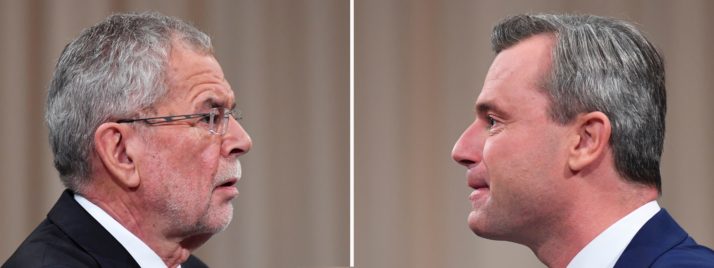
On Sunday, Austrians return to the polls to elect a new president, choosing between the liberal Alexander Van der Bellen, a former Green party leader, and Norbert Hofer, the candidate of the far-right Freedom Party.


If this all sounds vaguely familiar, an electoral Groundhog Day, that’s because it is. The upcoming election is a redo of the presidential election in May. Van der Bellen won that poll by a hair’s breadth, but the Freedom Party, citing technical irregularities, demanded a new election. The country’s highest court, in a controversial ruling, agreed, prompting the do-over.

To add insult to injury, the new election had to be delayed by a month after officials discovered that the adhesive on some postal ballots was defective.

Many Austrians are fed up with the process, which they worry has made them the laughing stock of the EU.

Now, as in the spring, the two candidates are neck-and-neck in the polls. Even the issues are the same, with refugees, trade and the EU all looming large.

The biggest similarity? No one has a clue who’ll win.

What is clear is that the result will be felt far beyond Austria’s borders. In the coming months, voters in the Netherlands, France and Germany also go to the polls, making the Austrian election the first major test of voter appetite for populist prescriptions at a national level in this election season.

With Italians set to vote on Sunday as well — in the referendum on Prime Minister Matteo Renzi’s constitutional reform — Europe’s already turbulent political landscape could face further destabilizing just in time for Christmas.

“It’s worth remembering that we face a fundamental question over the country’s direction” — Alexander Van der Bellen
Though the Austrian and Italian polls may bear few similarities on paper, citizens of the two countries are essentially deciding on the same question: Do we trust the political status quo? Recent election and referendum results in Europe, whether regional polls in Germany or the U.K.’s Brexit vote, suggest there’s a good chance the answer is ‘No.’

If Austrians heed that call for change, it would mean more than electing Europe’s first far-right head of state since the war. Though Austria’s presidency has traditionally been a ceremonial role, the office carries deep symbolic character.

Freedom Party’s waltz

A Hofer victory would be seen by many as a popular disavowal of the ruling political class — a Social Democrat-led grand coalition — and could trigger new parliamentary elections in the coming months. The Freedom Party would be the likely winner.

As infighting in the grand coalition has sapped support for both the center-left and center-right parties, the Freedom Party has surged ahead. It currently leads national polls with about 35 percent, compared to just 27 percent for its nearest rival, the governing Social Democrats.

If any Western European country is going to put the populist Right in power, it’s likely going to be Austria. Though electing Hofer might risk turning the country into a pariah in the region, Austrians have been there before.

In 1986, the country elected Kurt Waldheim president despite an international outcry over his wartime record. In 1999, voters flocked to the Freedom Party in national elections, ignoring grave warnings from the European Union and Austria’s neighbors.

Critics worry that normalizing the populists will only legitimize their politics.
Then under the leadership of Jörg Haider, the Freedom Party finished second and joined a coalition led by the center-right People’s Party. The result prompted Austria’s EU partners to impose diplomatic sanctions on Vienna.

In a sign of how much Europe’s politics has changed in the past 15 years, Austria has so far faced no such threats this time around. That’s because far-right politicians like Hofer are no longer an aberration, but a fact of life across the Continent’s political landscape.

Testing ground for Social Democrats

That’s not to say Europe’s establishment parties are sanguine about the threat, but they’ve been forced to find new strategies for confronting it. In that regard, Austria has come to serve the function of a case study, a testing ground.

When German vice chancellor and SPD leader Sigmar Gabriel visits Vienna this week to meet Chancellor Christian Kern and other European Social Democrats, for example, one of the main topics of discussion will be how to deal with the far Right.


The meeting comes just days after Kern changed tack in his approach with the Freedom Party, dropping his party’s traditionally belligerent stance. During a live debate with Freedom Party leader Heinz-Christian Strache on Austrian radio last week, Kern said that despite their differences, he believed that Strache also “wants to take our country forward.”

The friendly debate left many in the country wondering if Kern, who has only been chancellor since May, was hinting the Social Democrats might be open to a coalition with the Freedom Party, something the center Left had ruled out in the past at the national level.

Or was it merely a tactical move, aimed at showing the Social Democrats’ openness to Freedom Party voters?

Whatever the case, the exchange illustrated how the far Right is forcing the establishment parties to rethink their playbook.

Critics worry that the reappraisal could come at the expense of core values, whether over asylum laws or in regard to the EU. Normalizing the populists, they warn, will only legitimize their politics.

As election day approaches, Van der Bellen has tried hard to remind voters, many of whom have been frustrated by the nearly year-long campaign, of what’s at stake.

“It’s worth remembering that we face a fundamental question over the country’s direction,” he said in a recent television interview.

Authors:


Matthew Karnitschnig